
 Türkçe

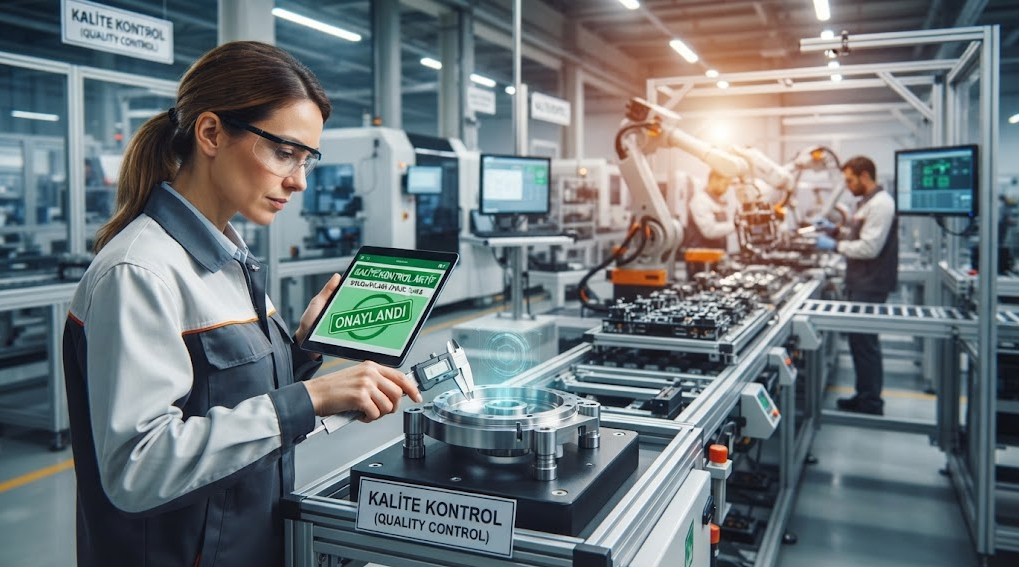
Every manufacturing business operating in today’s competitive markets shares a common goal: to deliver flawless products to their customers, optimize costs, and achieve sustainable growth. The strongest shield on the path to this goal is quality control processes.
Many businesses view quality control merely as an “approval or rejection” stage performed at the end of the process. However, in modern industry, quality control is a strategic approach positioned at the heart of every operation, from raw material entry to final packaging. Why does quality control have such a profound impact on your manufacturing processes? Let’s take a closer look.
What Exactly is Quality Control in Manufacturing?
Quality control (QC) is the set of processes that verify whether manufactured products meet specific standards, technical specifications, and customer expectations. The goal is not just to filter out defective products, but to find out what caused the defect and prevent it from recurring from the very beginning of the process.
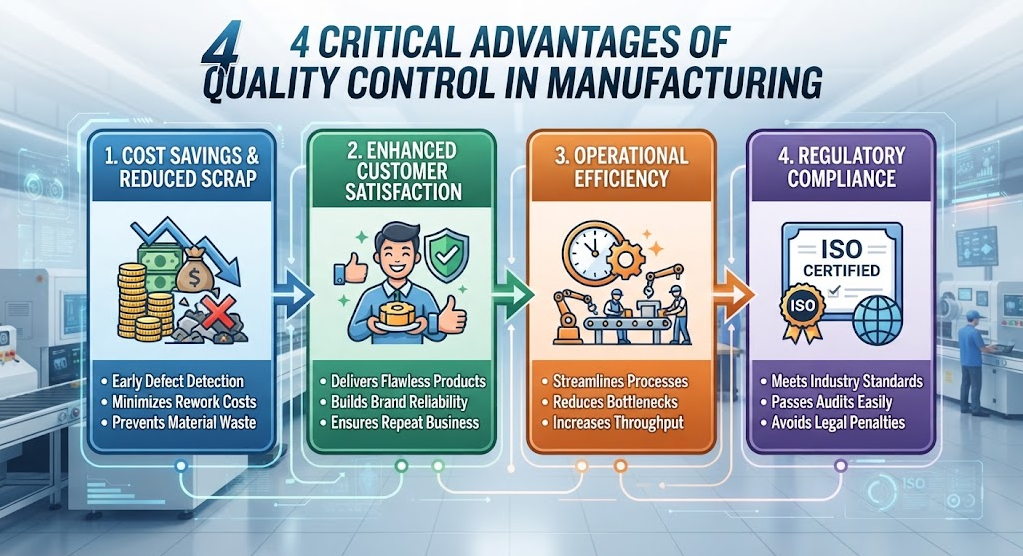
4 Critical Advantages of Quality Control in Manufacturing
1. Cost Savings and Reduction in Scrap Rates
Discovering a defective product at the very end of the production line—or worse, after it reaches the customer—is extremely costly. Regular quality controls carried out throughout the process ensure that defects are identified at an early stage. This prevents raw material waste, reduces rework costs, and provides serious budget savings for your business.
2. Customer Satisfaction and Brand Loyalty
The primary rule of competing in the market is reliability. Your customers want to receive the products they order at the same high standard and trouble-free every single time. Regular quality control practices reduce the shipment of defective products to zero, keeping customer satisfaction and your brand reputation at the highest level.
3. Operational Efficiency and Process Optimization
Quality control data transparently reveals bottlenecks on the production line. Through this data, you can easily analyze which machine is due for maintenance, which operator needs additional training, or which raw material supplier is experiencing issues. Thus, you can place the continuous improvement (Kaizen) cycle at the center of your production.
4. Regulatory Compliance and Adherence to Standards
Especially in automotive, food, machinery manufacturing, and industrial production sectors, compliance with national and international standards (such as ISO) is mandatory. An effective quality control system ensures you pass audits with confidence and eliminates the risk of facing legal sanctions.
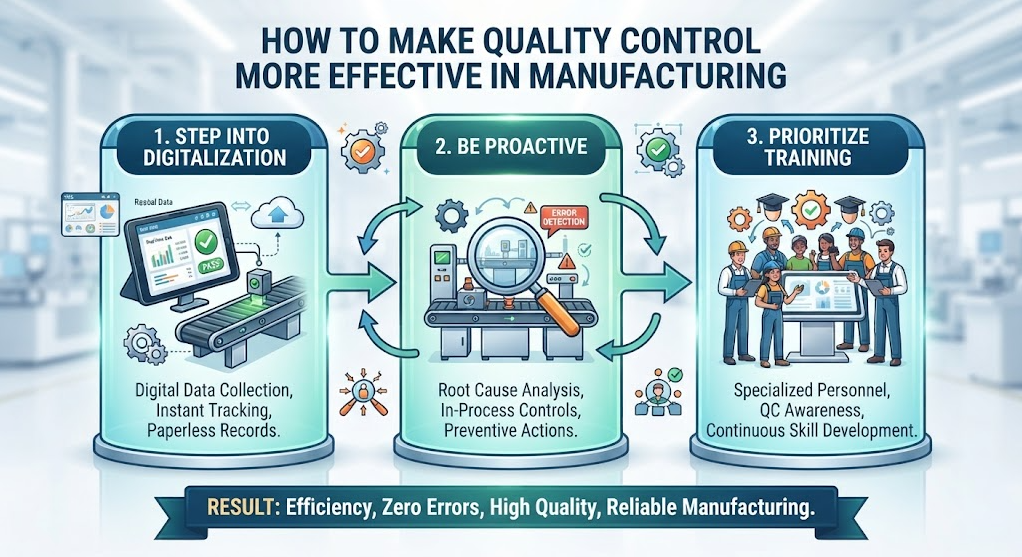
How to Make Quality Control More Effective in Manufacturing?
-
Step Into Digitalization: Instead of manual control logs, use digital data collection systems and MES (Manufacturing Execution Systems) to track defects instantly.
-
Be Proactive: Do not wait until the product is finished; get to the root cause of errors with in-process controls.
-
Prioritize Training: Do not view quality control solely as the responsibility of the quality department; raise awareness across the entire production team.
Conclusion
Quality control in manufacturing is not a cost item; it is the most profitable investment made in your future. Making your processes transparent, measurable, and error-proof is the most important step that will put you one step ahead in the industry.
If you want to take your quality standards in manufacturing to the next level and learn more about digital solutions tailored to your business, you can contact us right away!
